Indonesia Blue Carbon
Support our initiative to protect coastal ecosystems and mitigate climate change.

A Global Carbon Storage
Powerhouse
Blue Carbon refers to the carbon captured and stored by coastal and marine ecosystems such as mangroves and seagrass. As the world's largest archipelagic nation with the second-longest coastline, Indonesia plays a critical role as a global blue carbon powerhouse.
These ecosystems are exceptionally efficient at removing carbon dioxide (CO₂) from the atmosphere—often outperforming terrestrial tropical forests by a wide margin.
 Mangroves
 Seagrass
 Sediments
 Indonesia
Blue Carbon Ecosystems
A comparative analysis of Indonesia's mangrove and seagrass ecosystems.
| Parameter | Mangroves | Seagrass |
|---|---|---|
| Global Rank | Largest (22%) | Second largest (5%) |
| Total Carbon Stock | 3.0 Pg C | 0.37 Pg C |
| Avg. Storage/ha | 950.5 Mg C/ha | 119.5 Mg C/ha |
| Primary Storage | Soil (82%) | Soil (99%) |
| Sequestration Rate | 171 g C m⁻² yr⁻¹ | 221 g C m⁻² yr⁻¹ |
| Key Threats | Aquaculture, dev. | Pollution, dev. |
Indonesia’s Blue Carbon at Risk
Indonesia’s mangrove and seagrass ecosystems represent a globally significant blue carbon reserve, accounting for approximately 17% of the world’s total stock. However, this natural asset is under severe threat, as large-scale conversion— particularly for shrimp aquaculture—has driven the loss of an estimated 40% of mangroves over the past three decades.
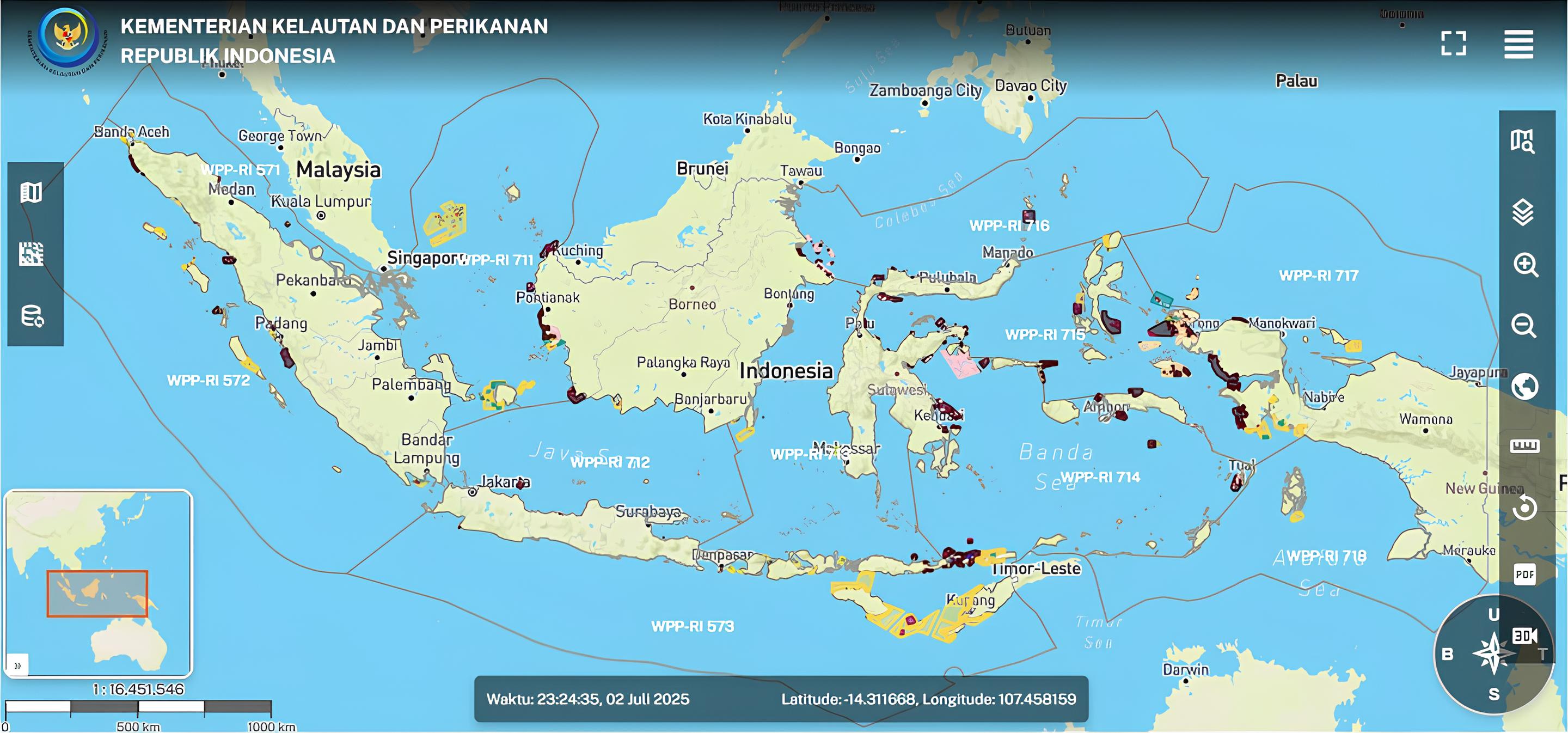
click on the map for more details
Blue Carbon Initiative
Ecosystem protection does not always hinder development and investment. Now is the time for development and investment to actively protect ecosystems to ensure their own long-term sustainability—through tangible contributions and active participation in climate change mitigation.

Collaboration and Action
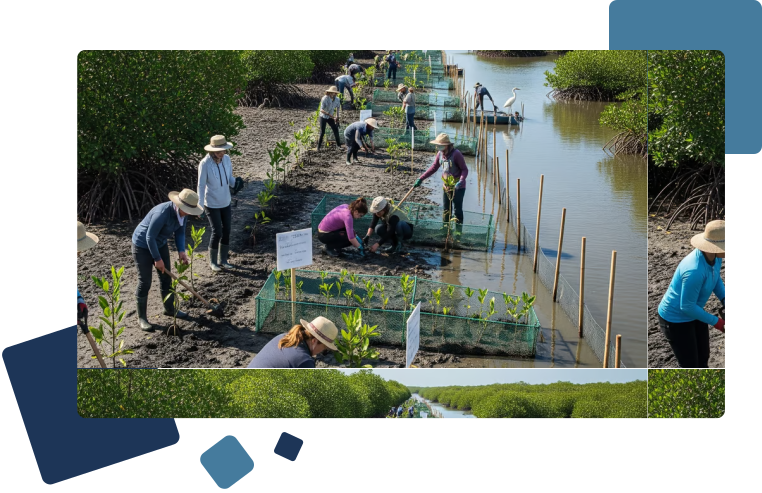
Join us in collaborating to protect, restore, and expand mangrove forests, seagrass meadows, coral reefs, and coastal wetlands—while transforming these ecosystems into spaces for community-driven economic growth.